
IEC 62955 Defines RDC-DD 6mA DC
IEC 62955 Explained: 6mA DC RDC-DD for EV Charging Protection
IEC 62955 is an international safety standard that specifies requirements for residual direct current detecting devices (RDC-DDs) used in Mode 3 AC electric vehicle charging stations. Its primary purpose is to detect smooth DC residual currents and initiate protective disconnection before DC leakage compromises the operation of upstream Type A or Type F residual current devices (RCDs).
For EV charger manufacturers, integrating a suitable 6mA DC residual current monitoring unit (RCMU) into the EVSE protection system can support compact charger designs, reliable leakage detection, and electrical safety compliance.
IVY Metering develops AC/DC residual current sensors and integrated RCMU solutions for EV charging equipment manufacturers, supporting 6mA DC and 30mA AC leakage detection, flexible mounting, and multiple signal interfaces.
1. What Is IEC 62955?
IEC 62955 defines the technical, functional, and safety requirements for residual direct current detecting devices used in permanently connected Mode 3 AC electric vehicle charging stations.
The standard addresses the detection of smooth DC residual currents, protective disconnection, operating characteristics, environmental performance, and device reliability.
IEC 62955:2018 Scope and Key Requirements
IEC 62955:2018 Residual DC Current Monitoring Devices (RDC-DD), hereinafter referred to as RDC-MD (Residual DC Current Monitoring Device) or RDC-PD (Residual DC Current Protective Device) for permanently connected AC electric vehicle charging stations (EV charging mode 3 according to IEC 61851-1 and IEC 60364-7-722)
| Parameter | Description |
| Standard | IEC 62955:2018 |
| Device | Residual Direct Current Detecting Device (RDC-DD) |
| Application | Mode 3 AC EV charging stations |
| Rated current | Up to 125A |
| Rated frequency | 50/60Hz |
| Rated voltage | 230VAC, Up to 440V AC |
| Rated DC residual operating current | 6mA DC |
| Device classification | RDC-MD and RDC-PD |
| Main objective | Smooth DC residual current detection and protective disconnection |
TÜV certification for IEC 62955:2018
It sets rules for RDC-DD to ensure that type A or type F RCDs function properly even with DC currents exceeding 6 mA. If the RDC-DD detects a steady DC current of 6 mA or more, it is designed to shut down the power supply to the electric vehicle. It can indicate a potential problem or safety risk, which is essential to protect people using and interacting with electric vehicles.
2. What Is a 6mA DC RDC-DD?
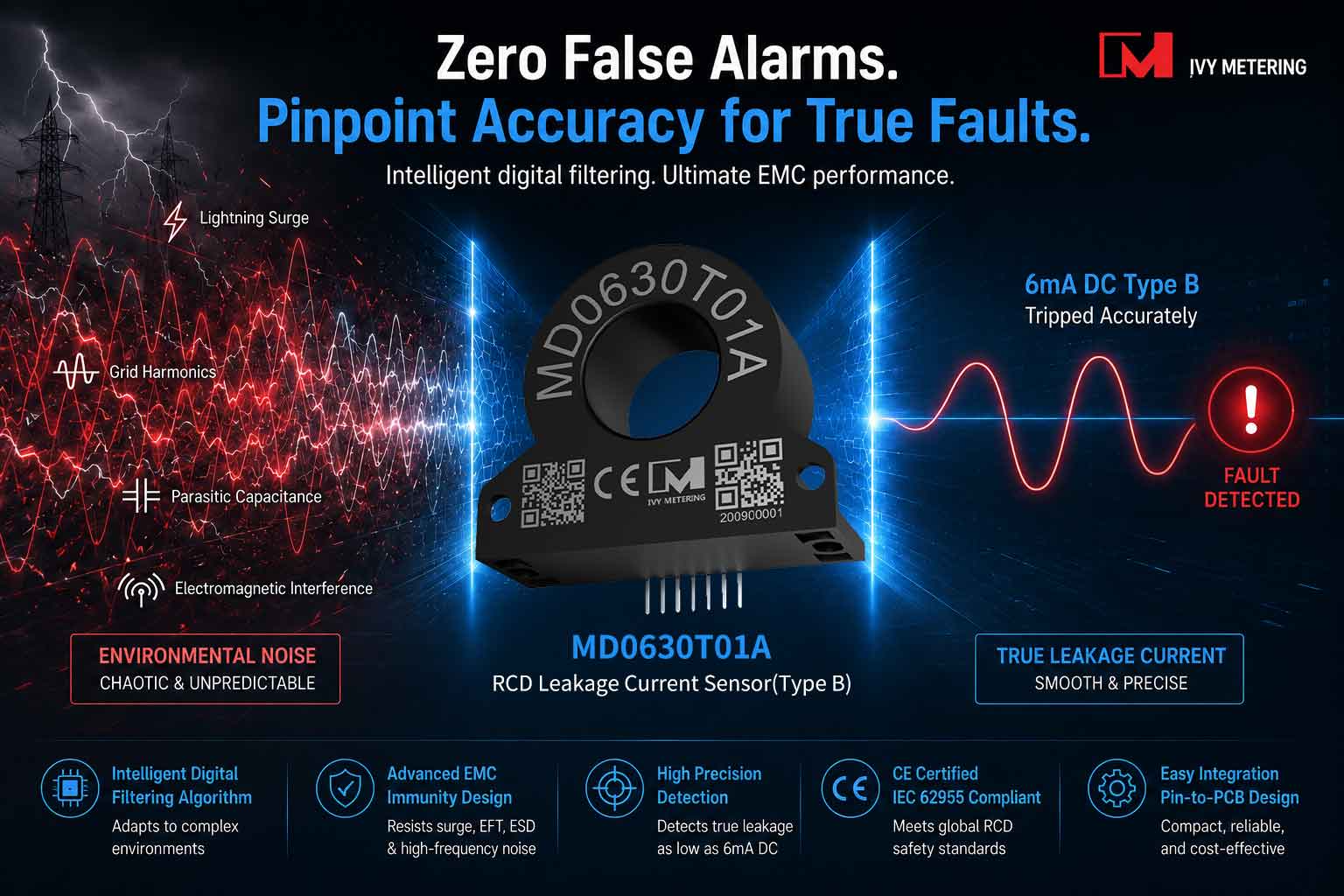
RDC-DD (Residual DC Current Detection Device) are safety devices used to protect against electrical hazards. They monitor the current and can quickly disconnect the power supply if a leakage of a 6 mA DC residual current is detected, which could occur due to a fault or if someone came into contact with live electrical parts. This means that our products are officially approved by the renowned testing institute TÜV, ensuring that the RDC-DD components within them meet all key technical and safety standards.
In charging stations, the RCD protection is integrated into the EV charger and is part of the product composition. Charging stations should be installed with an external RCD type A in a fixed installation. The charging station contains a DC residual current detection device (RDC-DD) in accordance with IEC 62955. Disconnection in the event of a DC fault current exceeding 6 mA is ensured by a common switch, which cuts off the control current of all internal relays so that they open simultaneously.
3. Why Does IEC 62955 Specify 6mA DC Leakage Detection?
The 6mA DC threshold is intended to prevent smooth DC residual currents from interfering with the protective operation of upstream Type A or Type F RCDs.
Modern EVs contain onboard chargers, rectifiers, and power conversion circuits. Under certain fault conditions, these components may generate smooth DC leakage currents in the AC charging circuit.
Excessive smooth DC residual current can magnetically bias or saturate the sensing core of a conventional RCD, reducing its ability to detect subsequent AC residual current faults. This phenomenon is commonly known as RCD blinding.
By detecting smooth DC leakage and initiating protective disconnection, an RDC-DD helps maintain the effectiveness of the overall residual current protection system.
4. How Can EVSE Manufacturers Integrate an IEC 62955 RDC-DD Solution?
Integrating an RCMU into an EV charging station requires coordination between residual current detection, fault evaluation, protective switching and system diagnostics.
The following engineering factors should be considered during EVSE development:
Detection capability: Support for smooth DC and required AC residual current waveforms.
Mounting method: Compact PCB mounting or flexible cable mounting.
Signal interface: Digital output, open-collector output, UART or Modbus, depending on the selected module.
Response characteristics: Sensor response time and complete system disconnection time.
Self-test function: Verification of supported sensor detection and signaling functions.
EMC performance: Reliable operation in the electrical environment of an EV charger.
System safety: Appropriate behavior during sensor, controller or switching-device failures.
For single-phase EVSE, the relevant line and neutral conductors are monitored together. For three-phase EVSE, all relevant live conductors are monitored. The protective earth conductor is excluded from the monitored conductor group.
5. IVY Metering 6mA DC Residual Current Sensor Solutions
IVY Metering is a residual current sensor manufacturer offering AC/DC leakage detection components for EV charging equipment, including PCB-mounted and cable-mounted RCMU modules.
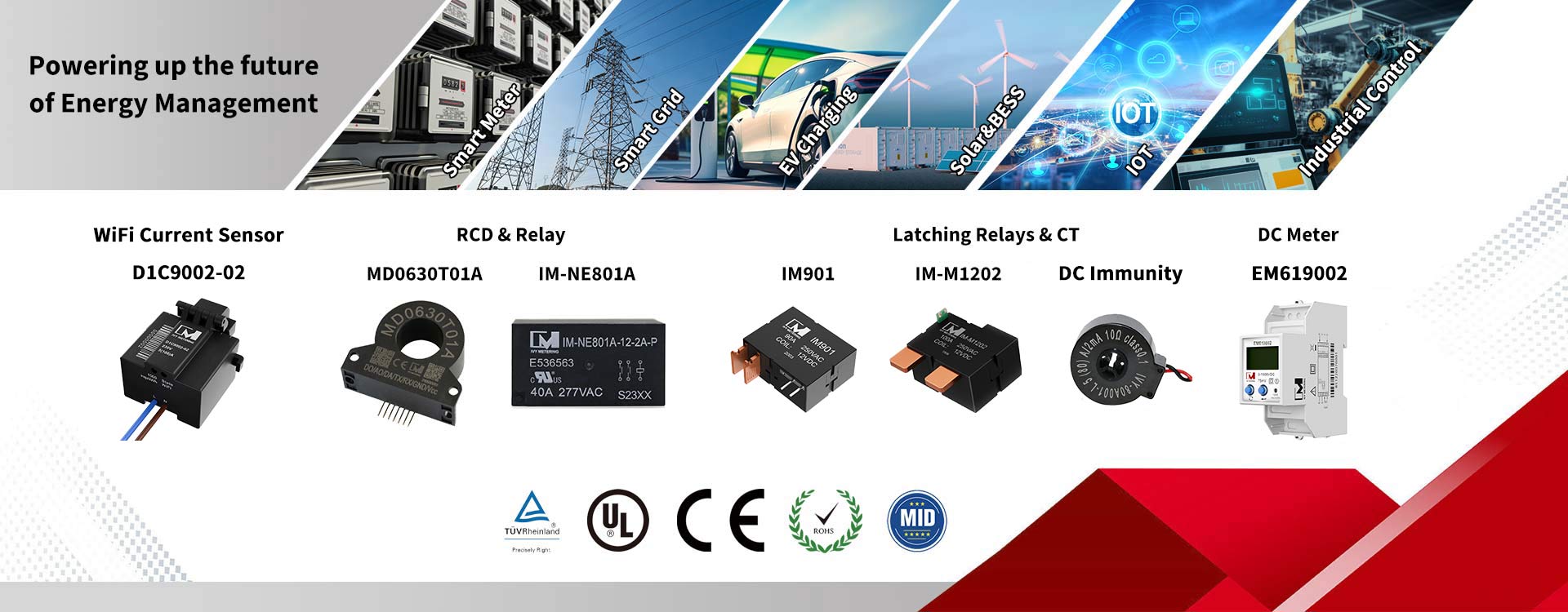
The IVY MD0630 series is designed to support compact residual current detection architectures for EVSE manufacturers.
IVY RCM Product Selection Guide
| Model | Detection | Mounting | Output / Interface | Recommended Application |
| MD0630T01A | 6mA DC / 30mA AC Type B | PCB Mount | Digital / UART / Modbus | Smart AC wallbox |
| MD0630STA-C | 6mA DC / 30mA AC Type B | Cable Mount | Open Collector / Self-test | Standard AC EVSE |
| MD0630STA-PM | 6mA DC / 30mA AC Type B | Compact PCB Mount | Open Collector / Self-test | Portable EVSE |
| MD0630T41A | 6mA DC / 30mA AC Type B | PCB / Cable Mount | Digital / UART / Modbus | Smart EVSE controller |
| MD0630T41A-1 | 6mA DC / 30mA AC Type B | Cable Mount | Digital Output, No comm. | Mode 2/3 AC charger |
Key Advantages of IVY Residual Current Sensors
6mA smooth DC and 30mA AC residual current detection.
Compact designs for integrated EVSE applications.
PCB-mounted and cable-mounted configurations.
Digital and open-collector fault signaling options.
UART and Modbus communication on selected models.
Self-test capability on selected models.
Flexible OEM integration for EV charger manufacturers.
6. Frequently Asked Questions About IEC 62955 and RDC-DD
Q: What does IEC 62955 mean for EV charging stations?
A: IEC 62955 defines requirements for devices that detect smooth DC residual currents and initiate or perform protective disconnection in Mode 3 AC EV charging stations.
Q: Why is 6mA DC leakage detection required in EV charging?
A: The 6mA DC detection function helps prevent smooth DC residual currents from compromising the operation of upstream Type A or Type F residual current devices.
Q: Can an RDC-DD replace a Type B RCD?
A: A coordinated Type A RCD and IEC 62955-compliant RDC-DD arrangement can be an alternative to a Type B RCD where permitted by the applicable installation requirements. A standalone RCMU sensor is not a direct replacement.
Q: Does IEC 62955 apply to DC fast charging stations?
A: IEC 62955:2018 specifically addresses RDC-DDs for Mode 3 AC charging stations. DC fast charging equipment has different protection requirements and requires a separate safety assessment.
Q: Where can EVSE manufacturers source 6mA DC residual current sensors?
A: IVY Metering offers AC/DC residual current sensors for EVSE OEM and ODM applications, including compact PCB-mounted and cable-mounted RCD modules with digital, open-collector, and communication interface options.
Conclusion
IEC 62955 establishes an important technical framework for smooth DC residual current detection in AC EV charging stations. The 6mA DC detection function helps maintain the effectiveness of upstream RCD protection and supports coordinated electrical safety. For EV charger manufacturers, integrating a suitable RCM into the EVSE protection architecture provides opportunities for compact equipment design, flexible fault monitoring, and efficient system integration.
Contact IVY Metering to request product datasheets, technical support, certification documentation, and samples for your next EV charging project.
References
IEC 62955:2018 — Residual direct current detecting device (RDC-DD) to be used for Mode 3 charging of electric vehicles.