

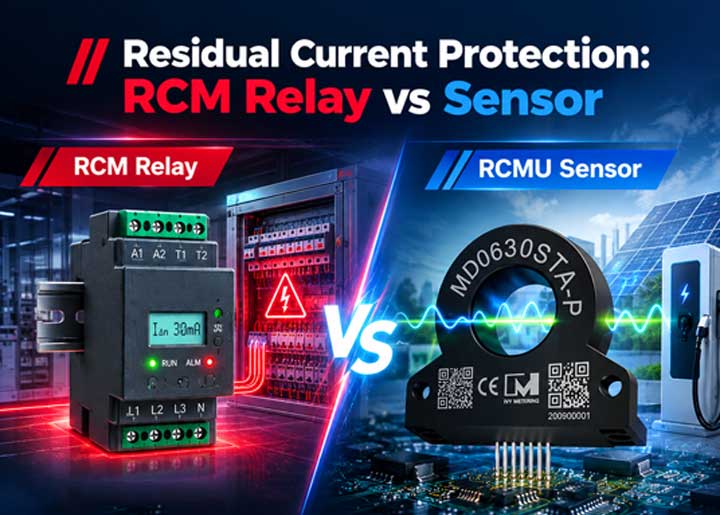
Residual Current Monitoring Relay vs Residual Current Sensor: What's the Difference?
View More >
Pulished on Oct. 13, 2026
When designing earth-leakage protection architectures, electrical engineers often confuse two core components: the residual current monitoring relay (RCMR) and the residual current monitoring unit (RCMU). Although both detect leakage current, their roles at the system level are fundamentally different.
How does magnetic immunity affect smart meter relays?
View More >
Pulished on Sep. 30, 2026
To meet increasingly stringent international standards for magnetic field immunity—such as the European IEC 62055-31 UC3 standard, which requires safe performance during short-circuit current testing even under strong magnetic interference—major meter manufacturers are currently enhancing immunity primarily through pulse or motor-driven.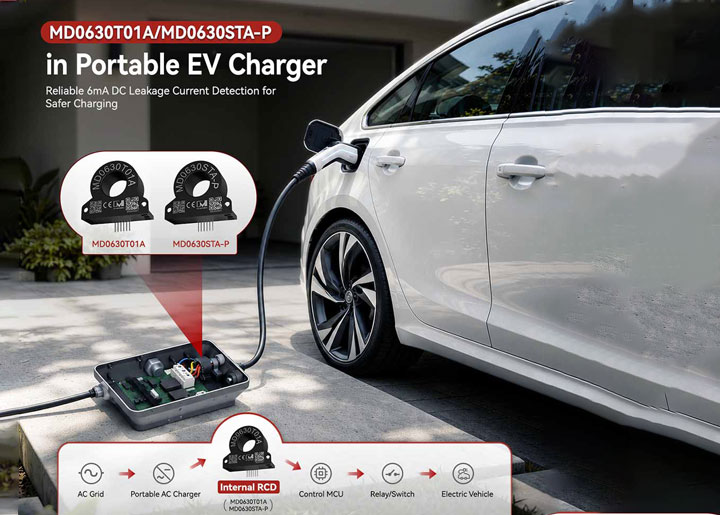
EVSE Architectural Dilemma: RCMU vs Type B RCCB (IEC 62955 Compliance Guide)
View More >
Pulished on Sep. 22, 2026
When designing AC electric vehicle supply equipment (EVSE) compliant with European IEC standards, developers typically face a choice between two leakage protection architectures: a traditional mechanical Type B RCCB (compliant with IEC 62423) or a modern integrated RCMU paired with an external relay (compliant with IEC 62955).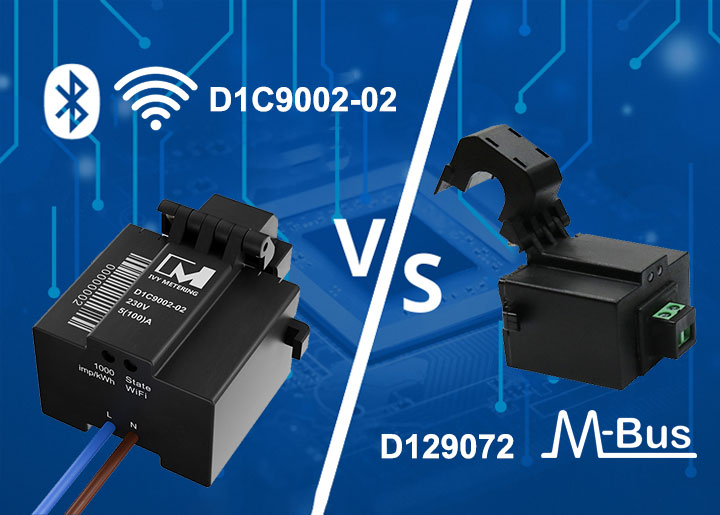
How to Select a Current Sensor: Wireless Wi-Fi vs Wired M-Bus
View More >
Pulished on Sep. 14, 2026
A current sensor is a crucial electrical device that detects AC or DC electric current flowing through a wire and generates a proportional measurable signal. This output signal can then be used to display the measured current, store the data for energy management, or trigger control actions in a larger system.
2026 European Smart Grid Anti-Tampering Standards: The Ultimate Relay Selection Guide
View More >
Pulished on Aug. 27, 2026
As Europe accelerates its transition toward a fully digitized energy grid, utility companies face a significant, often hidden cost challenge: electricity theft. Economic losses resulting from smart meter tampering amount to billions of euros annually. By 2026, newly deployed smart meters must comply with extreme anti-tampering and UC3.