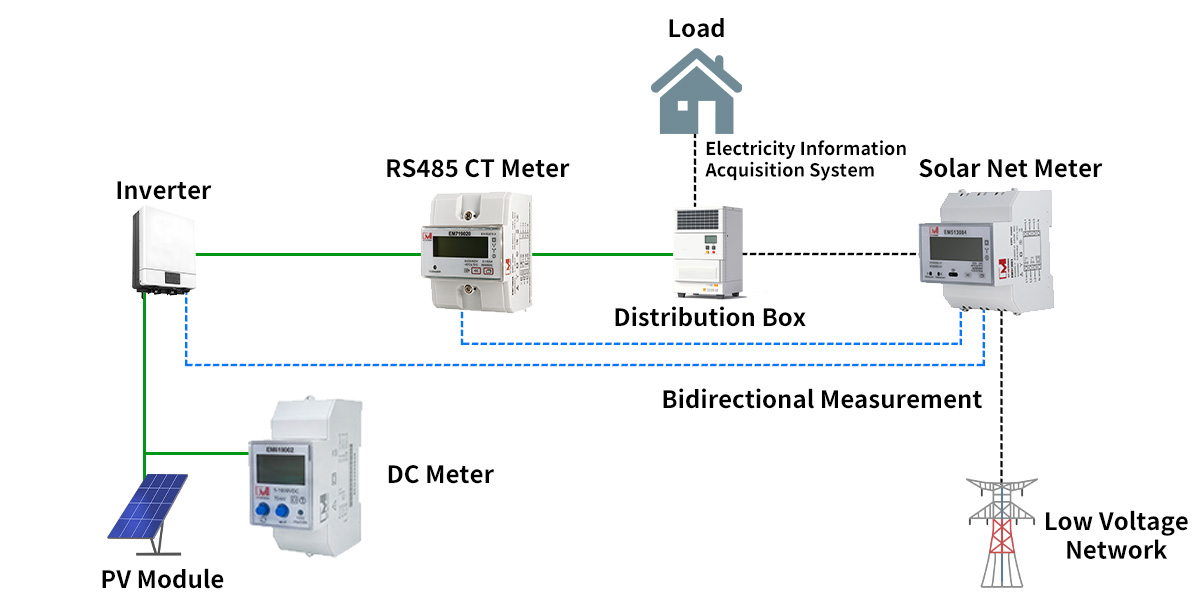
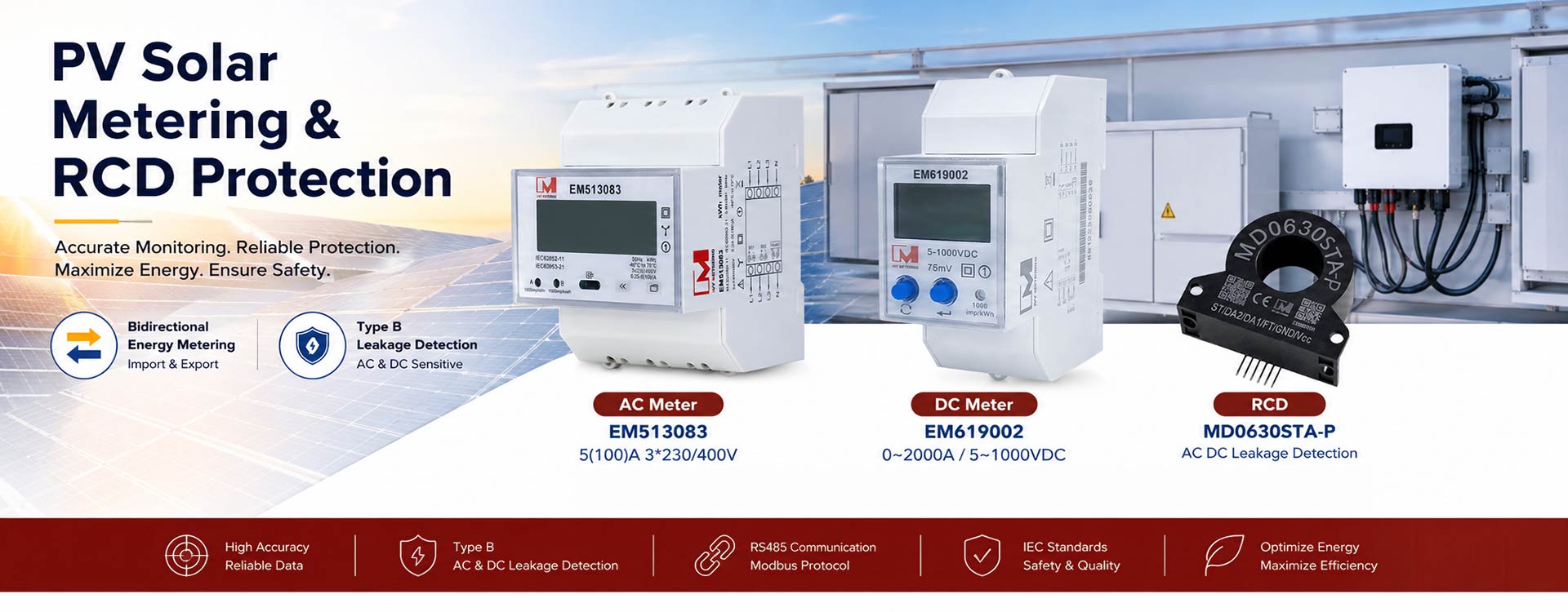
IVY Metering solar PV solutions include solar PV monitor(AC&DC energy meters), relay, and RCMU sensor, etc. A solar net meter, also known as a net energy meter, is a bi-directional meter that measures the flow of electricity in both directions, allowing you to credit excess electricity generated by your solar panels back to the grid. This credit can then be used to offset future electricity consumption when your solar panels aren't producing enough power.
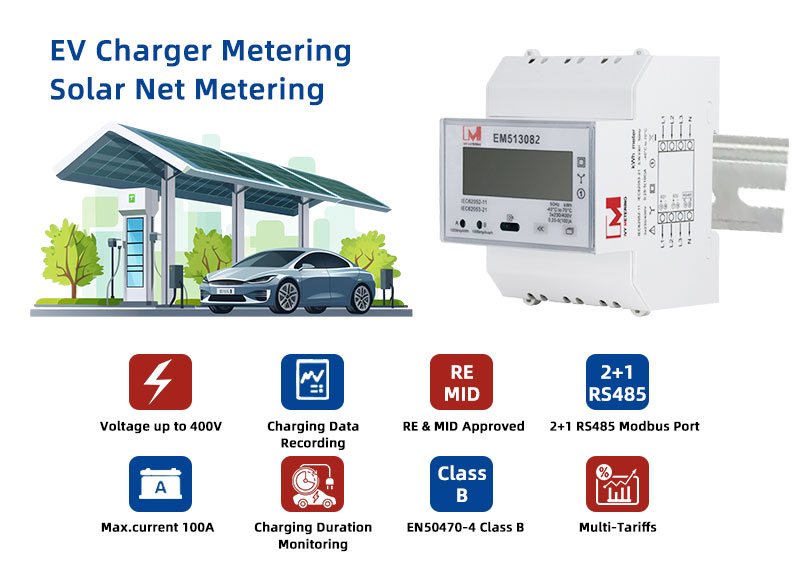
The EM513082 is a reliable Class B MID-certified three-phase energy meter providing precise measurement of both active and reactive energy. With a voltage rating of 3x230/400V and a current range of 5(100)A, this meter supports both forward and reverse energy measurement, ensuring comprehensive monitoring. Compliant with EN50470-1/3 requirements, it offers versatile RS485 communication, seamlessly supporting both the widely adopted Modbus protocol and the DLT645 protocol, enabling easy integration into various monitoring systems. The inclusion of a built-in battery ensures data integrity during power interruptions, and the integrated tariff function allows for multi-rate energy billing. Its compact design allows for simple DIN rail mounting.
High-Accuracy PV Monitors & Solar Energy Meters
In the renewable energy sector, accurate data is the key to maximizing ROI. A reliable PV monitor (solar energy meter) is the brain of your photovoltaic system, ensuring every watt is accounted for. Whether you need a solar DC meter to track raw generation from solar panels and battery storage (ESS), or a bidirectional solar AC meter to monitor grid consumption and feed-in tariffs, our comprehensive solar power monitoring solutions deliver real-time visibility, pinpoint accuracy, and seamless EMS integration. Discover how our smart meters can safeguard your solar investments against power loss and system inefficiencies.