
What is an RCMU and Why is it important for EV Charger?
In the electrical and industrial sectors, RCMU typically refers to a Residual Current Monitoring Unit. It is a critical safety component used to monitor for residual current ("leakage current") in a system in real time.
What is an RCMU?
An RCMU is a high-precision sensor or protection device primarily used to detect residual current in both alternating current (AC) and direct current (DC).
Function: It continuously monitors the vector sum of the current flowing out of and back into the circuit. Under normal conditions, this sum should be zero; a deviation indicates a leakage current.
Key Difference: Unlike a typical residual current device (RCD), an RCMU usually does not directly include a disconnect function. Instead, it sends a signal to the control system (such as an inverter or EV charging station controller), which triggers a trip or alarm.
Why is it important?
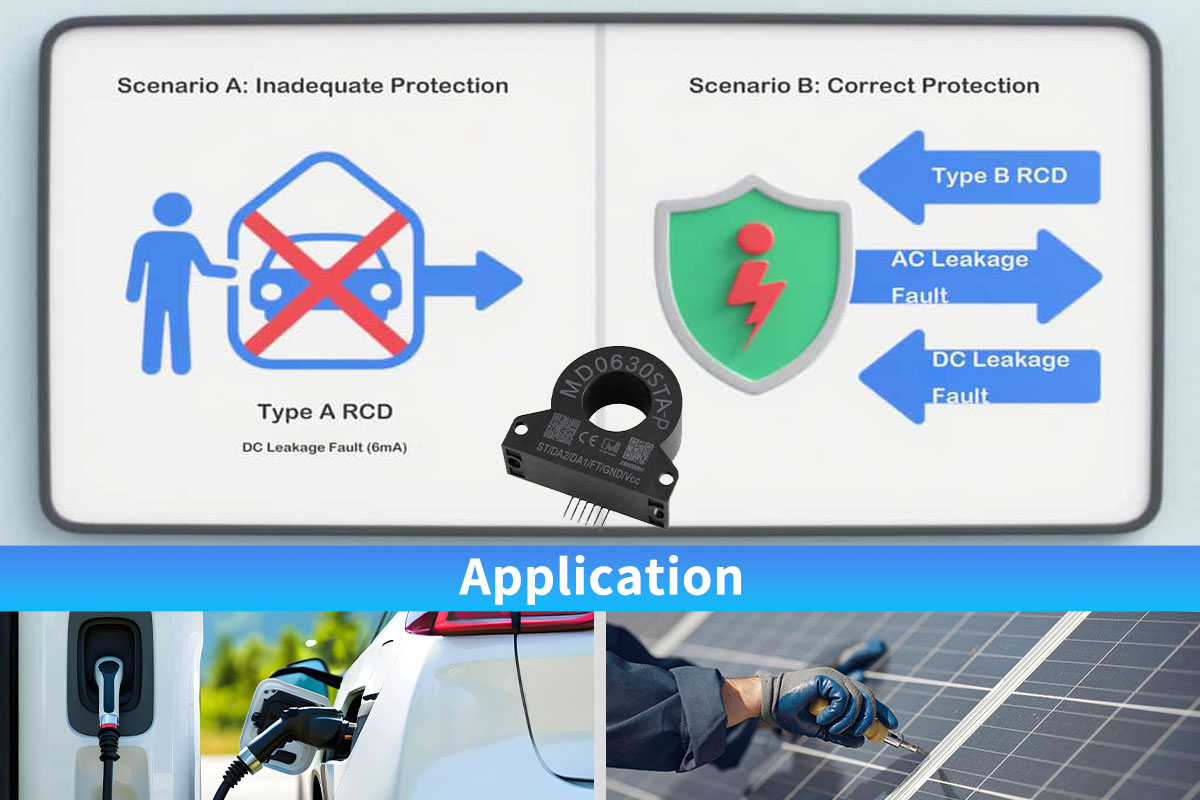
Preventing Electric Shock and Fire: It can sense even minute current leaks (typically 6mA DC or 30mA AC) and quickly trigger a safety response to prevent electric shock or fires caused by leakage current.
Electric Vehicle (EV) Charging Safety: During EV charging, DC leakage can cause traditional Type A RCDs to fail. RCMUs (especially Type B) specifically monitor the DC component, ensuring safe disconnection of the charging station in case of a fault.
Photovoltaic (PV) System Protection: Solar inverters typically have built-in RCMUs. Since many modern inverters are transformerless, the RCMU can monitor current leakage from the photovoltaic array to the grid, ensuring the system complies with safety standards (such as IEC 62109).
System Redundancy and Reliability: In industrial equipment, RCMUs provide a preventative monitoring mechanism. The system can issue an alarm before leakage reaches a dangerous level, thereby reducing unplanned downtime.
This is arguably the most important internal safety device and the cornerstone of electric vehicle charging stations.
Its Importance: Standard ground fault detectors (Type A) used in many homes cannot detect the "smooth DC" leakage generated by the power electronics of electric vehicles. If a DC fault occurs, the Type A residual current device (RCD) will not trip, resulting in a live fault, which can be fatal. This is the biggest hidden danger in substandard chargers.
The charger specifications must clearly state that it includes DC fault protection. You should look for the following:
“6mA DC leakage detection.” This is a mandatory requirement of the IEC 62955 international standard. In the North American market, electric vehicle charging equipment (EVSE) must have this 6mA DC leakage detection function (integrated or external). In the European market, you will encounter two types of products:
Type B RCD (detects AC, pulse, and DC faults) or RDC-DD (residual DC current detection device).
It is worth noting that RDC-DD/RCMU is a highly efficient and widely used alternative to Type B RCD, especially suitable for Level 2 charging stations. It focuses on detecting specific DC faults generated by electric vehicles and has been certified to standards such as IEC 62955.
Advantages of IVY Metering RCMU: Built-in Type B RCD
Many charging stations on the market require you to install an external Type B RCD, which can cost hundreds of dollars and take up valuable space on your distribution panel. With the IVY Metering RCMU/internal RCD, built-in Type B protection, making the overall installation much easier:
Simpler – Fewer devices to install
More economical – No need to purchase an expensive Type B residual current device (RCD) separately
Safer – Out of the box, meets international safety standards
This is especially useful for residential installers and small businesses who want to avoid unnecessary complexity while ensuring full compliance and safety.